Dysfunctional Family Dynamics: Patterns, Roles, and Healing

Dysfunctional family dynamics are ongoing patterns of communication, behavior, and emotional interaction within a family that undermine the well-being and emotional safety of one or more members. These patterns tend to repeat across situations and generations, often becoming so familiar that family members stop recognizing them as unusual.
This page explains what dysfunctional family dynamics look like, the common roles people take on within them, how these patterns carry into adult life, and how therapy can help.
What is a dysfunctional family?
Dysfunctional dynamics are not about one bad argument or a difficult holiday. They are persistent, often unspoken rules that govern how family members communicate, express emotion, and relate to one another.
These patterns can include:
- Poor or indirect communication, where important things go unsaid or are communicated through passive aggression, silence, or triangulation (involving a third person instead of addressing someone directly).
- Lack of emotional support, where feelings are dismissed, ridiculed, or treated as inconvenient.
- Rigid or absent boundaries, ranging from enmeshed families where personal space barely exists to disengaged families where members are emotionally on their own.
- Denial of problems, where addiction, abuse, mental illness, or conflict is minimized or treated as something no one should talk about.
- Power imbalances, where one member's needs or moods dominate the entire household.
Most families experience some level of difficulty. "Dysfunctional" is not a binary label. It describes patterns that cause ongoing harm to the people inside them.
Common patterns in dysfunctional families
Several patterns show up repeatedly in families that therapists and researchers describe as dysfunctional.
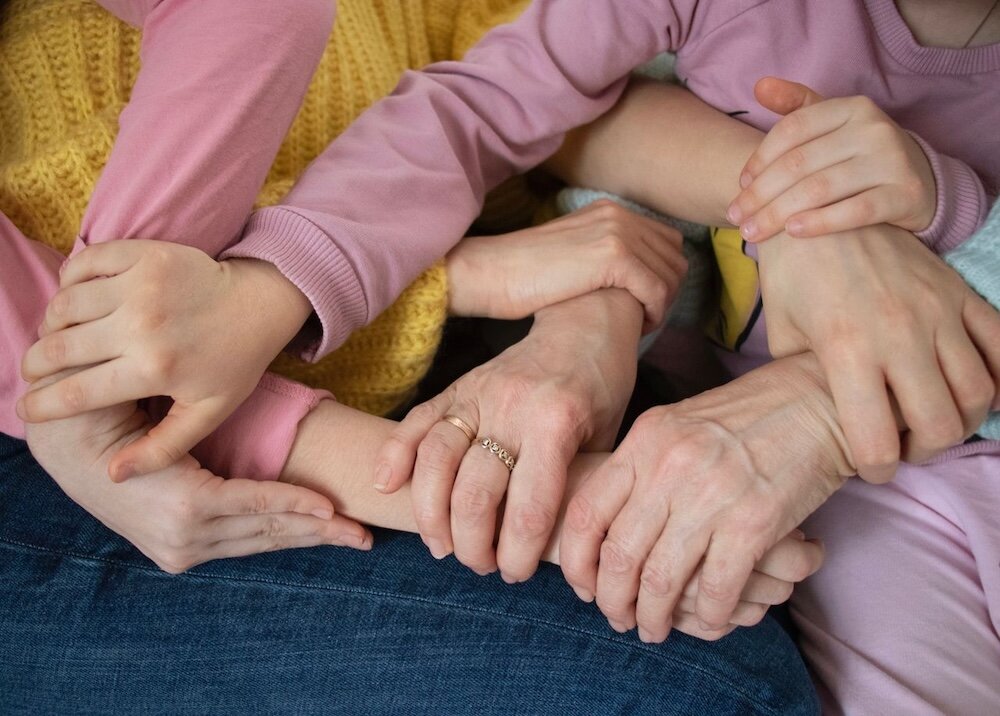
Enmeshment. Boundaries between family members are blurred or nonexistent. Individual identity is discouraged, and members are expected to share the same opinions, emotions, or priorities. A child in an enmeshed family may struggle to know where their own feelings end and a parent's begin.
Scapegoating. One family member is consistently blamed for the family's problems or singled out for criticism. The scapegoat absorbs the family's discomfort so others do not have to confront the real source of tension.
Parentification. A child takes on responsibilities that belong to an adult. This can be practical, like managing the household or caring for younger siblings, or emotional, like serving as a parent's confidant or emotional support system. Research published in the Journal of Family Therapy (2020) links parentification to higher rates of anxiety and depression in adulthood.
Denial and secrecy. Problems like addiction, abuse, or mental illness are minimized, hidden, or treated as topics no one is allowed to raise. The unspoken rule is: "We don't talk about this."
Rigid control or chronic chaos. Some dysfunctional families operate under excessive authoritarian control, with strict rules and no room for disagreement. Others swing in the opposite direction, with inconsistent rules, emotional volatility, and an environment where no one feels safe predicting what will happen next.
Roles people take on in dysfunctional families
In families with dysfunctional dynamics, members often fall into unspoken roles that keep the family system running. Family systems theorists, including Sharon Wegscheider-Cruse, have described several common ones.
- The hero. The overachiever who brings external validation to the family. Performs well at school or work, often at a personal cost.
- The scapegoat. The one who acts out or is blamed for the family's problems. Often the most honest member of the family about the dysfunction.
- The lost child. The one who withdraws, staying quiet and out of the way to avoid conflict.
- The mascot. The one who uses humor or charm to deflect tension and distract from what is really happening.
- The enabler. The one who smooths things over, makes excuses for harmful behavior, and works to maintain the status quo.
- The caretaker. The parentified child who takes care of everyone else's needs at the expense of their own.
These are not character flaws. They are adaptive responses to a stressful environment. People took on these roles to survive, and recognizing them is often the first step toward choosing something different.
How dysfunctional family dynamics affect adult life
The patterns learned in a dysfunctional family do not stay in childhood. They often shape adult relationships, self-perception, and mental health in ways that can be hard to see from the inside.
Common effects include:
- Difficulty setting boundaries. If you grew up in a family where boundaries were ignored or punished, saying "no" as an adult can feel dangerous or selfish.
- People-pleasing. Many people who grew up in dysfunctional families learned early that their safety depended on managing other people's emotions. That pattern often carries forward.
- Repeating relational patterns. It is common to choose partners or friends who mirror familiar family dynamics, even when those dynamics were painful.
- Chronic self-criticism. The inner critic that developed in response to family messages can become a persistent voice in adulthood.
- Trouble trusting others. If the people who were supposed to be safe were also the source of harm, trust does not come easily.
- Anxiety and depression. Research on adverse childhood experiences (ACEs) from the CDC and Kaiser Permanente shows a strong, dose-response relationship between childhood adversity and adult mental health conditions.
Understanding these connections is not about blaming your family. It is about recognizing patterns so you can respond to them differently.
How therapy can help
Therapy provides a space to identify the family patterns that shaped you, understand how they operate in your current life, and develop new ways of relating to yourself and others.
Individual therapy helps you process the personal effects of family dynamics, build boundary-setting skills, and interrupt patterns like people-pleasing, self-blame, or insecure attachment. Cognitive behavioral therapy and psychodynamic approaches both have strong evidence for this kind of work.
Family therapy is an option when family members are willing to work on patterns together. A therapist can help the family see the dynamics from the outside, change communication patterns, and build healthier ways of interacting.
Group therapy can be useful for people who find it grounding to connect with others who share similar experiences. Hearing someone else describe a dynamic you thought was unique to your family can be clarifying.
Octave therapists work with individuals and families navigating these dynamics. If you are ready to start, you can find a therapist who fits your needs.
Sources
- Wegscheider-Cruse, S. (1981). Another Chance: Hope and Health for the Alcoholic Family. Science and Behavior Books.
- Hooper, L. M., et al. (2020). Parentification and mental health outcomes: A systematic review. Journal of Family Therapy, 42(3), 332-357.
- Felitti, V. J., et al. (1998). Relationship of childhood abuse and household dysfunction to many of the top causes of death in adults. American Journal of Preventive Medicine, 14(4), 245-258. (ACE Study, CDC-Kaiser Permanente.)
- Minuchin, S. (1974). Families and Family Therapy. Harvard University Press.