Types of Affection: How People Show and Receive Love

Affection is the way people express warmth, care, and closeness to another person, through touch, words, time, actions, or presence. Every relationship carries its own mix of these forms, and partners often give and receive affection differently. This guide covers what affection is, the main types, what healthy affection tends to look like, what causes differences between partners, how couples therapy approaches affection needs, and how affection can be supported when it starts to feel uneven.
What is affection?
Affection is a broad category of everyday expressions of care between people. It shows up in a hug, a compliment, a shared errand, a text sent in the middle of a workday, or simply sitting together without needing to talk.
Affection is not the same as love itself. Love can run deep even when it's expressed in ways a partner doesn't immediately recognize as affectionate. How someone shows affection is shaped by their upbringing, culture, and past relationships, which is one reason two people who care about each other can still express that care in noticeably different ways.
Types of affection in relationships
Affection generally falls into a handful of recognizable categories, and most people express and want a mix of them rather than just one.
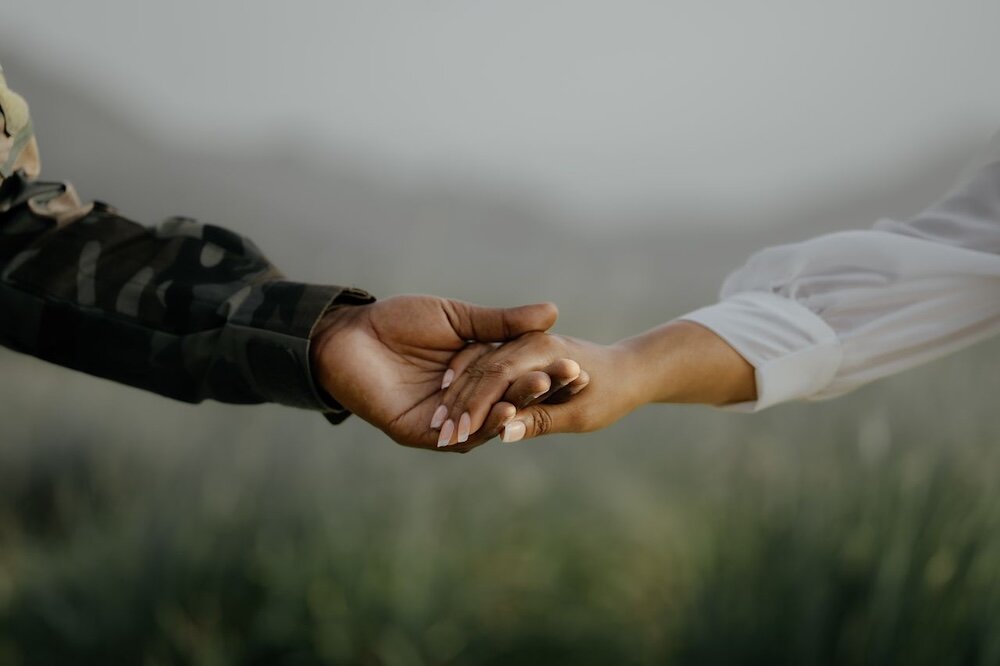
Physical affection includes touch such as hugging, kissing, cuddling, and holding hands. Verbal affection covers words of affirmation: compliments, encouragement, and simply saying, "I love you." Quality time means giving someone focused attention, whether that's a planned date or 20 uninterrupted minutes at the end of the day.
Acts of service show care through action, like handling a task so a partner has one less thing to worry about. Gift-giving is about thoughtfulness, not price; a small item that shows someone was on your mind counts as much as anything expensive. Emotional affection includes empathy, active listening, and being emotionally present during hard moments. Digital affection, such as a text or a call between in-person time, has become a meaningful category of its own for many couples.
Author Gary Chapman's Five Love Languages framework groups several of these categories (words of affirmation, quality time, gift-giving, acts of service, and physical touch) into a widely used way of talking about how people prefer to give and receive affection. It's a helpful vocabulary, not a rulebook. Most people don't fit neatly into a single category.
Signs of affection in healthy relationships
Healthy affection tends to show up in small, consistent gestures rather than only grand ones. A partner who checks in during a busy day, remembers a preference, or reaches for your hand without thinking about it is expressing affection just as much as someone planning an elaborate surprise.
Mutuality is another sign worth noticing: affection that flows in both directions, even if the forms differ, tends to support a relationship more than affection that feels one-sided. Partners in healthy relationships also tend to feel comfortable naming what they need ("I could use a hug right now") rather than expecting a partner to guess.
Affection doesn't have to disappear during disagreements. In stronger relationships, some baseline warmth (a tone of voice, a small check-in) often continues even while a specific issue is being worked through. There's no fixed frequency or form that defines a healthy amount of affection; what matters more is whether both partners feel that their needs are being met.
What causes differences in affection?
Differences in how people express and want affection usually come from a mix of upbringing, past relationships, and personality, not a lack of care for the current partner.
Family-of-origin patterns play a large role. Someone raised in a household where affection was shown openly may default to physical touch or verbal praise, while someone raised in a more reserved household may show care through action instead. Attachment style, shaped by early relationships and caregiving, also affects how comfortable a person feels with closeness, and how they interpret a partner's affection or the lack of it.
Culture and past relationship experiences add further variation; someone coming out of a relationship where affection was withheld or used inconsistently may need more explicit reassurance than someone with a more stable relationship history. Stress and life circumstances matter, too. Work pressure, parenting, illness, or grief can reduce the energy available for affection even when the underlying care hasn't changed. Recognizing these sources of difference is often the first step toward closing the gap between partners.
How affection in couples therapy is assessed
A couples therapist helps partners identify their own affection patterns and needs through structured conversation, not a test or a diagnosis. There's no clinical checklist for "correct" affection; the goal is understanding what each partner currently gives, currently wants, and where the gap sits.
Sessions typically start with each partner describing how they show affection and how they'd like to receive it, which often surfaces differences neither partner had put into words before. A therapist may introduce a love-language-style framework to give the couple shared vocabulary, then help them name specific moments where a mismatch caused hurt or distance.
For couples working through a drop-off in physical affection specifically, some therapists use structured approaches like sensate focus, which reintroduces touch gradually and without pressure so partners can rebuild physical closeness at a comfortable pace.
How affection in relationships can be supported
Affection can be supported by naming needs directly, experimenting with a partner's preferred forms of care, and working with a couples therapist when differences feel stuck. None of these require one partner to change who they are; they're about building a shared practice that works for both people.
Talking openly about affection preferences, without assuming a partner should already know them, is a practical starting point. From there, small consistent gestures, sent across a few different forms rather than just one, tend to go further than occasional large gestures. Patience matters, too: a partner whose affection style differs from yours is usually not withholding love, just expressing it in an unfamiliar way.
When affection differences have become a source of ongoing conflict or distance, couples therapy offers a structured space to work through them together. Octave connects couples with licensed therapists experienced in relationship and attachment work, and a therapist can help partners build affection patterns that reflect how they both actually want to connect.

Find a therapist who specializes in couples therapy
Sources
- Gary Chapman, "The 5 Love Languages," https://www.5lovelanguages.com/
- American Psychological Association, "Couples and relationships," https://www.apa.org/topics/couples-relationships
- American Psychological Association, "Attachment," https://www.apa.org/topics/attachment